ANDRERIEUMOVIES.COM

Fake André and Pierre accounts
Hard to get rid of them…


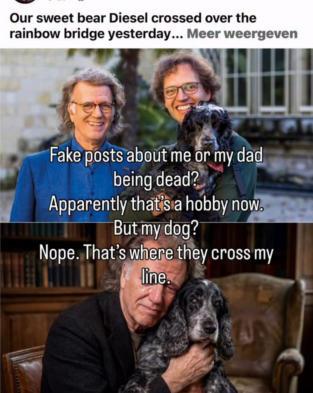
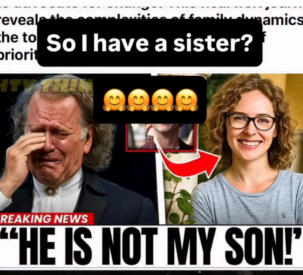

January 24, 2026 article from De Limburger.
by Tim Geurts and Jack Martens
Translation by Diana/Ineke.
Be aware of fake André Rieu and Pierre Rieu Facebook, Instagram, and YouTube pages that disseminate
A.I. photos and false information to uninformed fans. If you are accidentally a member of such group, please
unfollow the group and report the page. Continuing to visit the fake pages will only increase their viewership
and further spreading the fake information and scams.
André Rieu wants to tackle fake news.
Together with other artists, and it's essential that Meta cooperates.
Limburg celebrities such as André Rieu and Max Verstappen suffer a lot from the fact that their name and
face are used for scams. Violinist André Rieu wants to put a stop to the fake online messages that are
scamming his fans. His son, Pierre Rieu, says that his father's company is trying to contact national and
international artists.
"We're not the only ones affected by this. This also applies to the Verstappens and Andrea Bocellis of this
world. And countless others," says Pierre Rieu, giving an example.
"Recently, a woman from Portugal transferred 22,000 euros. She thought it was my father. She supposedly
used it to buy a piece of his castle. She had a signed letter with it. It even included the signature (forged, of
course) of a lawyer we've worked with before. It is heartbreaking”
André Rieu lying on a hospital bed in an oxygen mask, a few days before he takes his last breath. And his
wife Marjorie fighting for her life after a serious car accident. The Rieu family has had a hard time in recent
months. Especially since all this is happening right after the waitress at restaurant De Gulde Draak broke
Rieu's precious Stradivarius. And then, to top it off, there is the sad death of Pierre Rieu's dog. Anyone who
sees it in a row – and this is only a very small selection – would almost think that the Rieu family has started
a real soap opera series. That's not the case. Just like everything above is utter nonsense.
Messages of Support
Yet, social media is full of stories of misfortune befalling Rieu and his family, including poorly executed AI-
generated images. It's laughable, although that's certainly not the effect it has on Pierre Rieu. He regularly
sees the consequences of these social media posts. And anyone who clicks on the comments under such
articles on Facebook will indeed see a surprising number of messages of support. Apparently, many people
believe these stories. "I receive messages daily. Often from the children of women who think they are in a
relationship with my father. Mothers who have usually already transferred a lot of money to my father. Or at
least, that's what they think. These children are practically begging us to please tell their mothers that it's all
not real," Rieu says.
Because the messages on Facebook are just the beginning, Rieu knows. And the fact that the photos look
so fake is entirely intentional, he explains. "The people who react to those posts are the people who are
susceptible to scams. Those social media messages are purely intended to pick out the right – vulnerable –
people."
That's when the real scam begins. After someone has expressed their sympathy, they are supposedly
contacted by people posing as Rieu's management, or even as the violinist himself. "To thank them and
start a conversation. Or to ask if they would like to send a bouquet of flowers, for example? And so it
continues."
Pierre Rieu has experienced firsthand just how far these scams go. "Recently, a woman from Portugal
transferred 22,000 euros. She thought she was sending it to my father. She believed she had bought a
piece of his castle with that money. She even had a signed letter, complete with the (forged, of course)
signature of a lawyer we've worked with before."
Once initial contact is made, it becomes much more difficult to expose the scammers. "Anyone who
searches online can easily find out who we work with. So, if you then do a Google search, it all seems quite
legitimate. You'll indeed find a lawyer we work with. Or you might believe that the fake email from Roger van
Elssen is real, because you can find online that he is a director at our company."
Discouraged
Rieu sometimes gets discouraged by it. "It doesn't only happen with my father. My mother has already 'died'
several times. I've regularly seen myself lying in a bed with an oxygen mask on. My twins now have a new
mother, and I can't even count the multi-million dollar deals with Netflix anymore. Just type my name into
Facebook. I think there are about fifty people who pretend to be Pierre Rieu, sometimes with thousands of
followers."
Pierre Rieu tries to deal with the subject with some humor on his Instagram account. When another photo of
his father in a hospital bed surfaced, he reacted with: "Too much vibrato can apparently be dangerous." And
when his dog was recently declared dead, Rieu posted: "Fake news about the death of me or my father?
Apparently, that's a hobby these days. But my dog? No, that's where I draw the line."
Little of that humor remains when he hears the story of someone who has fallen victim to a scam. "Last
year, on the day we were supposed to fly to Birmingham, two women suddenly showed up at the gate. They
rang the doorbell and then told the security guard: 'We're here.' The security guard, of course, didn't
understand what they were talking about, but one of the women was convinced that she was in a
relationship with my father. They had had so much contact online, she had already transferred money
several times, and she had been promised that she would fly to Birmingham with my father that day. That
woman's world truly collapsed when it became clear to her that it was all fake. It's heartbreaking." This
exploitation of vulnerable, often lonely people is deeply upsetting. "We always advise people to file a police
report, but you also know that the scammers are probably sitting behind a computer somewhere far away in
Nigeria or something."
Fraud Help Desk
The Fraud Help Desk recognizes the misuse of well-known names, although they cannot specify this for
individuals like André Rieu and Max Verstappen. They don't primarily focus on the fake messages that
appear online, but rather on the number of fake advertisements that misuse the name or face of famous
Dutch people. "In 2024, we recorded over 140 reports involving advertisements featuring a famous Dutch
person, and in 2025 this number rose to over 270. It is therefore clear that this method is frequently used by
scammers," the help desk stated in a written response.
Media lawyer Matthijs Kaaks also knows that this is happening extensively. He was the one who, together
with Jort Kelder, took action against Google and Twitter, tech giants whose platforms were rife with fake
advertisements featuring famous Dutch people at the time. The fight was successful. In the appeal, the
verdict was that Google was liable for these fake advertisements.
However, Kaaks also sees that this has not solved the problem. "In 2019, when this fight began, it was
mainly about the use of photos of famous people, especially as clickbait. Now, you see it happening more
and more with deepfake videos. Fake videos in which the expertise or credibility of Dutch celebrities is
misused to spread disinformation. For example, fake videos of medical professionals such as Marion
Koopmans, Ted van Essen, or Diederik Gommers are regularly circulated to promote dubious remedies for
diabetes."
Fake Videos
The same thing happens, for example, with fake videos that promote fraudulent investment products.
"Often, the victims are lured into a fake WhatsApp group, supposedly run by the investment advisor who
gives tips and advises on which stocks to buy, often small, unknown funds. This causes the price to rise
significantly, and that's when the scammers, who already own a considerable number of shares themselves,
cash out. In this way, they secure their profits through 'pump and dump' schemes, leaving the victims with
shares that are suddenly worth little to nothing."
The problem is that, due to ever-improving AI techniques, this form of fraud is becoming increasingly easy.
Manipulating videos to make them somewhat believable is child's play these days. "Moreover, malicious
advertisers can reach the right target group very quickly via Facebook. Age, interests, a specific region –
you can reach people very effectively and quickly. And don't be mistaken. We don't even know how many
people are being scammed. Not everyone reports it. People are ashamed that they fell for it."
According to Kaaks, the big problem is that Facebook hardly monitors anything. "Based on European
legislation, the Digital Services Act, parent company Meta (the company behind Facebook and Instagram,
among others) has the obligation to take structural action against deepfakes and scams. Furthermore, Meta
must immediately remove a false message or deepfake after it is reported."
Perpetrators difficult to catch
Facebook rarely removes content itself, so reporting is essential, according to Kaaks. “When André Rieu
reported the fake messages and requested their removal from Meta, but similar messages reappear a week
later, then Meta is negligent and liable for damages. And whether it's an advertisement or a random
message from a third party, the principle remains that after being notified, Facebook must remove the
content if it is unlawful. So if those messages reappear online, André Rieu or Max Verstappen will have to
go to court. But in practice, that happens very rarely.”
In addition, finding the perpetrators is almost impossible. The distributors of the messages are rarely traced
and prosecuted. “Because identity verification is inadequate. In the Google case, we demanded the
personal data of the advertisers who had placed the fake messages with Jort Kelder's portrait. When we
finally obtained the data of the scammers after the intervention of the court, it turned out to be IP addresses
with addresses in countries such as Vietnam, Peru, and Russia. You can't do much with that, and it also
shows that the control by the large platforms at the gate is a sham. So getting to the real perpetrators is
very difficult.”
This also makes it extra complicated for people who actually transfer money to these scammers. “They
almost always end up empty-handed. The authorities do not track down the perpetrators, due to a lack of
capacity and because other cases take precedence, and due to the use of constructions with accounts in
distant countries, it is also a hopeless task. To be honest, I don't know of any examples of scammers who
have been convicted for these types of advertisements. Ultimately, the solution will have to be found in a
stricter and more rigorous approach by Meta and the other big tech platforms that allow themselves to be
used for this purpose, and often profit from it.”
The floodgates are open
Pierre Rieu can't wait for things to change. Because to date, reporting these incidents hasn't made any
difference. “It’s like trying to mop up a flood with the tap still running, and it has hardly any effect. It often
takes a very long time before a post is removed, if it happens at all.” Addressing this type of scam is also
only marginally successful on other platforms. “We also regularly report fake videos on YouTube to Google.
But sometimes the infringement is even disputed there, for example, because no music is used.”
Nevertheless, he also sees positive developments. He calls it “good news” that X’s AI chatbot (Grok) is
under fire for “undressing people” and has to make adjustments. Taking Meta to court is not yet on the table.
“We want to try other methods first.”
André Rieu wants to tackle fake news on social media together with other artists.
Violinist André Rieu wants to put a stop to the fake online messages that are being used to scam his fans.
His son Pierre Rieu says that his father's company is trying to contact national and international artists to
come up with a solution. "We are not the only ones suffering from this. The same applies to the Max
Verstappens (Dutch F1 racing driver) and Andrea Bocellis of this world. And countless others."
In an ideal world, Rieu would like to be able to remove messages from Facebook himself. "We feel a great
responsibility to do something about this, and I am immediately willing to hire someone full-time for this."
However, it is necessary that Meta – the company behind Facebook, among others – cooperates.
"Currently, we can only report things, but that all takes a very long time and is sometimes ineffective." Being
able to remove fake messages themselves would work much better. "For example, that accounts with more
than a million followers get that possibility. With the limitation that if you make a mistake even once or
misuse the system, you immediately lose those rights."
By working together, Rieu hopes to achieve more. Although the plan to tackle the fake messages is still in
its initial stages, Pierre Rieu says. "I don't have Mark Zuckerberg's phone number, but if we, together with
all those artists, contact him or post something simultaneously to make a statement, then we have a better
chance of achieving something."
Velvet Star Sounds and Romantic Crescendo are among many fake accounts that need to be reported by
André Rieu fans. Facebook will get a resounding message when they received numerous simultaneous
reporting on the same scammer, to take immediate action for removal.
RESPOND?
tim.geurts@delimburger.nl
jack.martens@delimburger
Note: These journalists offer the opportunity to respond. It would be great if they received messages from
André fans around the world (please mention from which country you are). I know that our administrator for
the Harmony Parlor fan group (23.000 members!) on Facebook (Chris Fowler) has to delete several
member requests a day from Pierre, Marc and/or André to join the fan group! Thanks to his strict monitoring,
we've managed to keep the fakes out, so far. Well done, Chris, thanks a lot!!
Sharing a February 19, 2026 article from L1 Nieuws
Translation: Diana D. Le
André Rieu launches campaign against scams involving fake Rieu figures,
called: “Protect our fans!”
André Rieu is taking action against scammers who pose as the world-famous Maastricht violinist defrauding
fans. The Rieu family receives almost daily messages from victims worldwide who have lost hundreds or
even thousands of Euros on fake Rieu figures.
His son and manager, Pierre Rieu, told the NPO Radio 1 program Het Misdaadbureau (The Crime Bureau)
of PowNed. The campaign is to be called “Protect Our Fans”, and the hope is that more celebrities will join.
Fake Celebrities
Every year, dozens of Dutch people fall victim to dating fraud by fake celebrities. Victims believe they are
having romantic chats with Dutch celebrities, but in reality, they've landed a scammer. That's why the real
André Rieu will soon launch his campaign, not only to warn fans but also to urge Meta, the company behind
Facebook and Instagram, to take action.
Offline
"There are countless fake accounts active," says Rieu's son. "Ideally, we want Meta's mandate to take them
offline ourselves." Rieu hopes that other (international) artists will join the campaign.
February 24, 2026,
article from NPO Radio1: Maaike Timmerman
Podcast: The Crime Bureau
Translated by Diana D. Le
An online relationship with fake André Rieu:
"They are really in love with my father"
Fraudsters posing online as world-famous stars like
André Rieu are scamming victims worldwide out of large
sums of money. The latest episode of The Crime Bureau
explores the world of the "fake Rieu"—a group of people
who are victimizing countless individuals worldwide. To
gain insight into how these scammers operate, they
hooked their own "fake Rieu." Maaike Timmerman
discusses these scammers' methods with Pierre Rieu,
the son and manager of the real André Rieu, private
investigator and investigative journalist Nico van den
Dries, and Eunice Bom of the Fraud Help Desk.
Rising number of reports
The number of reports to the Fraud Help Desk has risen
dramatically in 2025 compared to 2024. "More than
100,000 reports were made last year, a 60 percent
increase compared to the previous year," says Noa van
Oostrom. "And many people have suffered financial
losses: 65 percent more." In total, nearly €69 million in
damages were reported to the Fraud Help Desk last
year.
In love with fake André Rieu: ‘She transfers all her money to him’
Podcast NPO Radio 1,
The Crime Bureau,
Maaike Timmerman
February 20, 2026
Starting an online affair with André Rieu? Presenter Maaike Timmerman succeeds within 24 hours with her
alter ego ‘Ineke’. She speaks with real victims and analyzes her adventures with Pierre Rieu, the son and
manager of the real André Rieu, private detective Nico van den Dries, and Eunice Bom of the Fraud Help
Desk, which specifically focuses on the psychological pressure exerted by fraudsters.
Journalist Noa van Oostrom delves into the latest fraud figures.
Via a stolen phone number from a 71-year-old American woman (who was unaware of the situation),
they end up in Nigeria.
Currently André launches a campaign against the fakes, collaborating with other national and international
celebrities under the name "Protect Our Fans".
They request the cooperation of Facebook (Meta) and aim to have the fake account removed themselves.
Dating fraud has also increased in the past year. "More than 400 people reported dating fraud, and that's
probably just the tip of the iceberg. And almost half of them also lost money." The damage is substantial,
says Eunice Bom of the Fraud Help Desk: "Victims lost a total of approximately €2.1 million. And then you
also have things like dating fraud combined with investment fraud, and there the damage is even higher, at
€3.5 million."
"There's a real explosion of online fraud. These days, almost everyone has a phone in their pocket, so it's
very easy to reach people via that phone," Bom explains. "And of course, we shouldn't forget social media."
Bom also sees the Fraud Helpline becoming more well-known: "Part of the explanation is, of course, that
people are more aware of how to find us."
Fake Rieu’s
In recent weeks, the Crime Bureau has delved into the world of "fake Rieu" scammers: con artists posing
online as violinist and orchestra leader André Rieu. These scammers are claiming numerous victims
worldwide. His son and manager, Pierre Rieu, is deeply concerned about this type of scam. "It's very scary,
and above all, frustrating and annoying." "They operate with extreme sophistication. They know our entire
corporate structure," says Pierre. "What happens more often is that our finance department receives an
email supposedly from me. It briefly comes from a different email address, because I'm supposedly in a city
where we actually are at that moment."
Pierre receives messages from victims almost daily. "It's the victims themselves who suddenly lose contact
with the supposedly "my father," even though they're so in love. And then it's crucial that they speak to him."
In other cases, Pierre is contacted by the victims' children. "They see a mother completely smitten with a
fake Rieu. They realize it, but they can't convince their mother." "Those ladies have a video, or even several
videos, supposedly of my father, in which he declares his love for them." The videos, made with AI, are often
very convincing for older people, says Pierre.
AI-Ineke
To investigate how these "fake Rieu’s operate, the Crime Bureau created an online account for a supposed
fan. "I said, 'Just create a fake account. Take a fake photo of an older woman, put flowers on your profile, a
picture of a kitten, a Rieu CD on your nightstand, and like a few posts. You'll be contacted in no time,'" Pierre
explains. And that turned out to be true. AI-Ineke quickly landed a "fake Rieu."
"We completely sketched her personality," says Maaike Timmerman. AI-Ineke is about 58 years old, has a
dog, loves gardening, and is a big fan of André Rieu. "That was also very clear on her Instagram," says
Timmerman. "I also placed cute icons under the real André Rieu. Within no time, I was contacted by fake
Rieu. And not by one or two, but ultimately by seven." To be honest, they're still coming in, because I still
have the account. Every two days, I get contacted by someone with 'Rieu' in their name."
Tackling the scam
"We also see that a lot of artists are being used," says Nico van den Dries, a private detective and
investigative journalist. "And you often see that it's not just one scam in a room in Nigeria, but another group
two rooms away doing exactly the same thing." This makes it difficult to tackle these scammers. "We had
one of the scammers arrested. We didn't do it ourselves, but ultimately handed him over to Interpol. He was
arrested in Nigeria, and he simply had six laptops."
Finally, the editors of The Crime Bureau (Het Misdaadbureau) also managed to contact the scammer. They
met face-to-face with the person behind the "fake Rieu" via video call.
L1 Nieuws
March 6, 2026, by Henk Hover,
Translation bij Diana.
André Rieu is fed up with identity fraud: "There are people who think they've been
chatting with me for three years"
Celebrities like André Rieu are increasingly confronted with people posing as them on social media.
Manipulated photos are used to suggest illnesses, accidents, or even death, while in reality, nothing is
wrong. Criminals who commit this identity fraud operate very sophisticatedly.
Pierre Rieu is not only his son, but also his father's manager: "Dad is declared dead somewhere every
week, him, me, my mother, or our dog. Especially on Facebook." André adds: "They use images created
with artificial intelligence, and they get better every week."
Campaign
The Rieu family has now had more than enough. They have launched a social media campaign and
created the hashtag #Protectourfans. The plan is for other celebrities to join in. "We see the same
practices with people like Max Verstappen, for example."
Complaint
"We are investigating whether we can file a complaint against Facebook. Anyone with even a passing
reputation is being exploited for this purpose. I hope we can make our campaign so big that someone at
parent company Meta will wake up and think: 'Oh no, we have to do something about this.'" According to
Pierre, countless fake accounts are active. Ideally, he would like to get Meta's mandate to take them offline
himself, under strict conditions.
So far, the Rieus have been powerless. There are plenty of examples, each one crazier than the last. "My
castle in Maastricht was supposedly completely dilapidated and was offered for sale by someone for
30,000 euros. Recently, people all the way from Groningen (city in the north of our country) showed up at
the gate. They claimed I had rented them two rooms in my castle, for which they had paid thousands of
euros."
A popular victim
The criminals operate very shrewdly. They reach out to people who like André Rieu's posts on social
media. They then establish contact with them, supposedly on behalf of management. People who respond
to fake posts about a terminally ill André are also popular victims. "They then send those people messages
along the lines of: 'Wow, how nice that you're sending get well wishes. André is doing well.' Those people
then think they've actually received a response from us. Then they follow up with a response along the
lines of: 'André is doing much better now. Partly thanks to your message. How wonderful.'"
A fifteen-minute search yields a mountain of fake messages.
A bouquet of flowers for 75 euros
The next question is: would you mind sending André a bouquet of flowers? They have to pay 75 euros for
that. If they do, they receive a fake photo of André and a note saying: "Dear Truus, thank you for your
flowers." Ultimately, such an unsuspecting fan sometimes hands over thousands or tens of thousands of
euros.
No romantic relationship
"It bothers me most that my gullible fans, kind, sweet people, are being duped like this, and I can't do
anything about it. There are people who think they've been chatting with me for three years." Pierre adds:
"There are adult children who contact me on Instagram and ask if I can please record a video with André
for their mother to tell her she's not in a romantic relationship with my father."
The whole identity fraud thing is a thorn in Rieu's side. The question is whether enough celebrities will rally
behind the hashtag campaign and whether it will prompt major tech companies like Meta to take action.
Hashtag #PROTECT OUR FANS
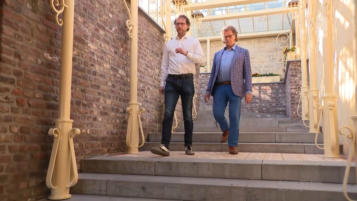
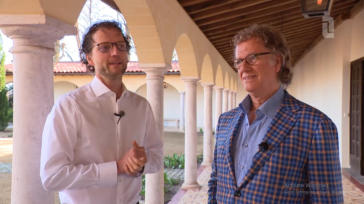
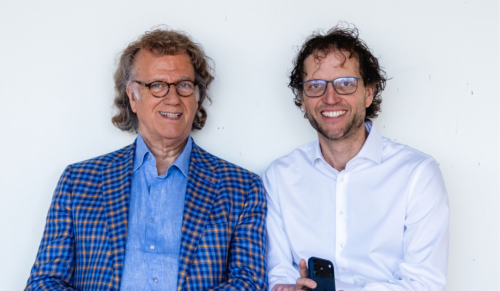
Photos: screenshots and L1 (Pien van Lieshout)
André Rieu and Pierre Rieu at his castle cloister in Maastricht, Netherlands.
The summary of the spoken interview is included in the article below.
Final joke: do you want to deny your secret loves? Then they're not secret loves
anymore! Hahaha.
André Rieu: Facebook, do something!
De Nieuwe Ster,
Peter Eberson
March 12, 2026 .
Pierre and André want Facebook to do something about all the fake messages.
Please Facebook. Stop this. Do something. "Protect our fans." On social media, André Rieu is
making an urgent appeal to Facebook to take action against the many fake accounts and fake
messages on social media. Many fans fall for it and sometimes lose a lot of money.
It is a problem that many famous artists have to deal with, including André Rieu. Hundreds of fake accounts
about the famous Maastricht native now exist, and fake messages are spread daily. Fans are being
scammed because they think they are in contact with the real André. They are asked to transfer money for
flowers for a sick André or because André is having financial difficulties. It is all nonsense, but gullible fans
from home and abroad fall for it, and the Rieu family believes this must stop.
André asks Facebook (Meta) to take measures against fake accounts.
In a post on Instagram, we first see son Pierre Rieu dressed as André, saying 'Hi everyone, André here'.
He humorously draws attention to the problem, subsequently stating that a great many fake messages are
appearing. "No, my father is not in the hospital, his dog is not dead, my dog is alive." "Furthermore, my
mother did not die in a car accident, André did not collapse on stage, and he did not change gender." All
fake messages, but sometimes fans cannot distinguish between real and fake. Therefore, an urgent appeal
to Facebook (Meta) to crack down on the scammers.
March 12, 2026
On our fan website
www.andrerieumovies.com
(since 2007) and the large English-
language Facebook fan group (23,000
members) "Andre Rieu Fan Site The
Harmony Parlor", we permanently have
had warnings posted regarding fake
Rieus. The first time in April 2018 (Check
our previous items 2018 Jan-Jul).
As far as we know, probably partly
because of this, none of our friends and
acquaintances have ever fallen victim to
these scammers. However, we are all
bothered by an increasing stream of fake
messages and we support André and
Pierre in their fight to stop it!
Ruud, Ineke, Sue, Chris.

June 16, 2016
SCAM ALERT
WARNING! Important information
We have received disturbing information regarding
scammers contacting fans by e-mails as well as
through Facebook and Messenger. One of our
members from Canada reports that his elderly wife
was scammed by a fake "André" to the amount of
several thousand dollars. This has been reported
to the Canadian police, but please be aware that
this could happen anywhere.



- Maastricht Dinnertime
- Maastricht Preparations
- Tickets & accomodation
- Ticket Mediation
- Trains from Amsterdam Schiphol
- Trains from Brussels, Paris, Frankfurt and London
- Maastricht Fan Dinner
- Maastricht Fan Picnic
- Maastricht City Walks
- Maastricht Mosasaurus
- Daytrips from Maastricht
- Vrijthof news
- Maastricht Bonbonniere
- Maastricht ENCI quarry

- 2026 - 2030
- 2021 - 2025
- Previous items 2025 Jul - Dec
- Maastricht 2025
- Previous items 2025 Jan - Jun
- Previous items 2024 Jul - Dec
- Index of this period
- Doctor Peter de Beer
- Phil Bee
- Carlo Bonnie
- André’s Castle De Torentjes
- André gets his own stamp
- Typewriter artist
- Duo X-Elle
- Cinema experience 2024
- Quote Business Magazine
- Concerts in Bogotá, Colombia
- Margriet Magazine (1)
- Margriet Magazine (2)
- André Rieu turns 75
- André’s 75th birthday party
- Concert in Milano
- Roadsoap 5
- Presentation of second biography
- Het Financieele Dagblad
- 2024 Christmas concerts
- Interview with Marjorie
- Interview with André Rieu
- Interview from Nous Deux
- Dorona Alberti looks back
- Maastricht 2024
- Previous items 2024 Jan - Jun
- Index of this period
- Kimberly Smith
- Amsterdam New Year's concert
- MAX Magazine
- Stradivari instruments
- Golden Carriage
- Bahrain concert
- Ineke's book
- Emma's birthday in Greece
- Organic carrots
- Mexico Illness
- New animated series
- Trio SAAMN
- Andre Rieu in cinema 2024
- Sculpture of Andre Rieu
- Making of the bull
- Book 75 year Andre Rieu
- Previous items 2023 Jul - Dec
- Maastricht 2023
- Previous items 2023 Jan - Jun
- Previous items 2022 Jul - Dec
- Index of this period
- December with André
- Ivo on Sunday
- World Record Academy
- Privé / Telegraaf
- Two Vienna concerts
- Pierre Kartner (Father Abraham)
- Shellfish from ENCI quarry
- Zagreb concert
- Great Maastricht Dictation
- South America Tour
- Tribute to Queen Elizabeth II
- Rose Festival in Lottum
- Photo exhibition William Rutten
- Fake tickets on sale
- L1 interview
- Rieu and the Royals
- Interview with Pierre Rieu
- Efteling News
- Announcement Christmas concerts
- Boundlessly popular
- Maastricht 2022
- Previous items 2022 Jan - Jun
- Previous items 2021 Jul - Dec
- Index of this period
- LINDA's Winterguests
- Max Verstappen World champion F1
- Lisbon concerts
- Christmas cinema movie
- Koffietijd program
- Christmas concerts 2021 postponed
- Mindfuck
- ARD1, Club1 program
- Promoting Portugal tour
- Limburg Central article
- Andre's birthday
- Kingsday 2022 in Maastricht
- Podcast: weird hit wonder
- NDR talkshow
- 10 Christmas concerts in the MECC
- Vera Russwurm interview
- Flooding benefit program
- Humberto interview
- Flooding in Limburg
- Two best friends, Andre and Andre
- Previous items 2021 Jan - Jun
- Index of this period
- Maastrichts dialect
- Playing again!
- OP 1 Interview
- Vrijfhof 2021 concerts postponed
- Covid Vaccinations
- EVC Congress
- Julia and Kathy
- L1 Interview
- 3 AW Nights interview
- Dutch Bake-Off
- Chinese Interview
- Rijsemus Violin builder
- Al-Jazeera Interview
- Blaaskracht
- PRESS info
- Happy New Year
- 2015 - 2020
- Previous items 2020 Jul - Dec
- Previous items 2020 Jan - Jun
- Previous items 2019 Jul - Dec
- Maastricht 2019
- Previous items 2019 Jan - Jun
- Previous items 2018 Jul - Dec
- Maastricht 2018
- Previous items 2018 Jan - Jun
- Index of first half 2018
- June 26th, VNG Congress
- May 13th, Duckrace
- May 12th, Professor Scherder
- May 11th, Time for Max
- Bulgaria concerts
- Fake Rieus
- April 2018, Tel Aviv
- East USA Tour
- MDR Um 4, March 26th,2018
- May 9th, Sandy beach radio
- Universal Music Award
- Semper Opern Ball
- New Years Concert Amsterdam
- Previous items 2017 Jul - Dec
- Lift-Off Splash Percussian School
- Index of 2nd half 2017
- Carmen Nebel show
- Christmas Events 2017
- Interview with Frank Michael
- Celebrity Radio interview
- UK Tour 2017
- USA Tour 2017
- German Tour 2017
- Q&A with fans on Facebook
- Sunday Night Interview
- Mexico Donation
- Day-Time in Maastricht
- RTL Helemaal het einde
- ARD Brisant
- NDR Tietjen and Bommes
- Making of Cinema video
- Maastricht 2017
- Previous items 2017 Jan - Jun
- Index of first half 2017
- Interview with Steven Wright BBC2
- Portrait of a Passion
- The "Real" Andre Rieu
- Welcome to my World 2
- Double interview Andre Rieu and Jo Cortenaedt
- Mirusia "From The Heart"
- Larura Engel "En Canto"
- Refugee brought Andre Rieu success
- Carla Maffioletti "A Dream"
- Venetian Carnival Revelers
- Golden Oldie from 1985
- Agnes Fizzano's shop
- Carnival speech Mayor of Maastricht
- Maastricht Pastry Route
- 2017 Valentines day
- Rieu plays in Semper Oper Dresden
- Linda Custers, Princess Carnaval
- New Years concert Ziggo Dome
- Ziggo Dome rehearsal
- Previous items 2016 Jul - Dec
- 2016 Jul - Dec, Index
- SBS6 Stars Surprise Show Dec 21st, 2016
- Liverpool december 2016
- Magic Maastricht 2016
- BBC Breakfast Today Show
- ARD Advent Show
- Two Million Likes
- CinemaLive Christmas
- SWR 4 German TV
- Strictly Come Dancing
- The meaning of life
- Leute Heute
- Dancing with the Stars
- In Conversation
- Free Mini Concert in Maastricht
- L1 Radio Interview
- Josti Band 50 years
- NDR Talk Show
- New Maastricht Salon orchestra
- Rieu in Cinema
- Maastricht 2016
- Previous items 2016 Jan - Jun
- Previous items 2015 Jul - Dec
- 2015 Jul - Dec, Index
- Rieu entertainment
- Dec. 2015, Bild Star Magazine part 4
- Dec. 2015, Bild Star Magazine part 3
- Dec. 2015, Bild Star Magazine part 2
- Dec. 2015, Bild Star Magazine part 1
- Nov. 17th, 2015, RTL Boulevard
- Nov. 12th, Shownieuws
- Nov. 16th, Loose Women
- Oct. 30th, Colectiv Club Fire, Bucharest
- Roman Holiday (3)
- Roman Holiday (2)
- Roman Holiday (1)
- Oct. 26th, Classic FM Q&A
- Oct. 23rd, MDR at 4 PM
- Oct. 10th, Jubilee Award
- Sep. 19th, 2015, Carmen Nebel
- Maastricht 2015
- Previous items 2015 Jan - Jun
- 2015 Jan - Jun, Index
- Code M, the movie
- Bucharest Concerts Part 1
- Bucharest Concerts Part 2
- A Latin Breeze
- Maestro without borders
- Copenhagen Concert
- Brazilian Fans
- George Harper In Memoriam
- Press Conference Romania Open Air Concerts
- RTL Late Night Show
- AvroTros TV Show
- Cologne Concert
- Valentine's day
- Tempeleers Carnaval Medal
- Markus Lanz Talk Show
- 2007 - 2014
- Previous items 2014 Jan - Jun
- Maastricht 2014
- Maastricht 2014, The Preparations
- Maastricht 2014, (Dress) Rehearsal
- Maastricht 2014, The Concerts
- Maastricht 2014, Fan Dinner
- Maastricht 2014, Three Fan Picnics
- Maastricht 2014, Lift-Off
- Maastricht 2014, Exhibition Marc Rieu
- Maastricht 2014, Our Story Page 1
- Maastricht 2014, Our Story Page 2
- Maastricht 2014, Venetian Carnival, the making of
- Previous items 2014 Jul - Dec
- Previous items 2013 Jul - Dec
- Advent Calendar 2013
- Spirit of Christmas
- Nelson Mandela
- Movie Marina
- BBC Breakfast Show
- German TV programs (1)
- German TV programs (2)
- L1 Late November 5th, 2013
- RTL Boulevard, October 31st, 2013
- Amira Willighagen
- Evenblij with....
- Australian tour 2013
- German TV Sept.2013
- ORF Vera Russwurm
- Jean-Philippe composes ode to Mary
- Tietjen and Hirschhausen 2013
- Rieu to play on North Pole?
- Maastricht 2013
- Previous items 2013 Jan - Jun
- RTL Boulevard June 19th, 2013
- Jean-Philippe's children's books
- What I know about women
- AR-Academy
- Copenhagen concert
- SkyArts2
- Limbourgeois April 30th
- The making of the Coronation concert
- King's inauguration Day 2
- King's inauguration Day 1
- King's Waltz
- Charity TV broadcast
- classicFM interview
- Trini Lopez
- Jean-Philippe's book
- Jermaine Jackson
- Dutch Queen Abdicates
- history fan websites
- Cologne, Jan.1st 2013
- Previous items 2012 Jul - Dec
- Limbourgeois 25 December 2012
- Chistmas in Birmingham
- Linda Magazine, December 2012
- Advent calendar
- Cinema Heerlen 2012
- Boulevard Nov 21, 2012 and Ajax
- André's Birthhouse
- UK TV Programs November 2012
- Classic Brit Award
- Andre in Brazil 2012
- Interview Dolman Rieu
- BVN Trophy 2012
- Westland Fruit and Flower parade
- L1mbourgeois August 19, 2012
- Maastricht concert 2012
- Previous items 2012 Jan - Jun
- Previous items 2011 Jul - Dec
- Maastricht 2011
- Previous items 2011 Jan - Jun
- The person behind the phenomenon
- Andre and Hopkins
- Interview in Vienna
- Frank Steijns and "Normaal" band
- PBS visiting Maastricht 2006
- Amsterdam ArenA 2011
- Pierres Hobby
- DWDD May 26th, 2011
- Madiwodovrijdag show
- André Rieu and Anthony Hopkins
- Mirusia DVD release
- Scary moments in South Africa
- BUMA Export award 2010
- Interview with Mirusia
- WDR swap reporter
- Previous items 2010 Jul - Dec
- Platin Tenors at the Cologne Christmas market
- Koffietijd December 20th, 2010
- Christmas concert by Mirusia
- Today Show December 18th, 2010
- Ice Sculpture Maastricht 2010
- The André Rieu Story
- UK November 2010 appearances
- Mexico City, November 28th, 2010
- Ivo Niehe interviews André Rieu after his illness
- André is Back!!
- LeuteHeute 151110
- André is rehearsing again
- First interview after sickness
- André cancels UK and Aussie 2010 tour
- Jubilee book 30 years André Rieu
- Interview with Pierre about André's ilness.
- Three hours marathon interview
- André escapes Toronto
- Previous items 2010 Jan - Jun
- Maastricht 2010
- Maastricht Winery, South Africa
- The best of Thirty Years André Rieu
- Mainau 2010, "Roses from the South"
- Dancing on Ice, 2010 UK finals
- Maastricht Stampsheet
- André to play for Queen Beatrix of The Netherlands
- At home with Bela Mavrak
- Export award 2009
- Farewell mayor Leers
- Flikken Maastricht
- Cologne 2010 concert
- Previous items 2009
- André and Friends ArenA 2009
- André's 2009 Christmas interview
- Christmas with Carmen Nebel
- Frank Steijns carillon
- Dutchman of the Year 2009
- Royal Variety Performance
- Brisant
- Dreams come true
- André's twins
- MDR André 60th birthday interview
- Sydney Oct.2009
- Ivo Niehe's interview with Mirusia Louwerse
- Maastricht Liberators
- Heidelberg September 2009
- Maastricht 2009, the concert
- Maastricht 2009 update
- America Tour 2009
- The week of André Rieu
- André in Villa VANTHILT
- Boulevard and Knevel and van den Brink
- André Rieu about New York
- Carmen Nebel in Maastricht
- André named best selling male artist
- André Rieu Stamp Booklet
- Maastricht 2009
- Interview with André on RTL9
- Marc Rieu, the other son
- Andre Rieu on his way to Australia
- André and Vegemite
- Ruud and Ineke meet Kathi (Caramia)
- Road Soap review
- André in de ArenA
- André get awards
- Good afternoon Limburg
- van der Vorst ziet sterren
- Previous items 2008
- Australian interviews with André
- Holiday in Australia
- Ivo Melbourne
- From Maastricht to Melbourne
- Interviews December 2008
- Melbourne Concert 2008
- Trier 2004
- Dresden
- Kerner and Nebel
- Maastricht but different
- Maastricht Vrijthof concert 2008, the highlights
- 60 Minutes, André Rieu and Andrea Bocelli
- Maastricht 2008 concert
- Aussie Interviews
- André in Ottawa
- Andre Rieu Tulips in Ineke's garden
- Ovation-Schofield
- De Rode Loper
- Boulevard
- Riverboat
- The Last Show
- Benny Neyman
- Ivo Niehe March 2008
- Kruispunt
- Tietjen and Dibaba
- Toronto by Alice Leung
- Toronto 2007
- Cologne 2008 concert
- Previous items 2007

- Agnes Fizzano-Walter
- Anna Majchrzak
- Anna Reker
- Annabelle Traves
- Béla Mavrák
- Bibi Ortjens
- Boris Goldenblank
- Brass section
- Carla Maffioletti
- Carmen Monarcha
- Christina Petrou
- Cord Meyer Leusink
- Donij van Doorn
- Els Mercken
- Emma Kok
- Frank Steijns
- Gary Bennett
- Gosia Tarnowski
- Gracenotes
- Jean Sassen
- Joline Soomers
- Justinas Kaunas
- Kimmy Skota
- Kremi Minerva
- Laura Engel
- Lift-Off (Marcel Falize)
- Maastricht Salon Orchestra
- Maja Jasinska
- Marcel Falize
- Manoe Konings
- Marc Rieu
- Michaela Oeste
- Michel Tirabosco
- Mirusia Louwerse
- Night of the Proms
- Pierre Rieu
- Platin Tenors
- Rene Henket family
- Roger Diederen
- Romano Diederen
- Ruud Merx / Lin Jong
- SAAMN trio
- Sanne Mestrom
- Serena Vanheuverswijn
- Stéphanie Detry
- Suzan Erens
- Tanja Derwahl
- Tiroler ohne Berge (Marcel Falize)
- VerrasSing
- Vincenzo Viola



- 2000 - 2009
- 2009: Andre meets Mr. Wijdbeens
- 2006: Josti Band
- 2006: Profiel
- 2005: Art Express Classic
- 2005: Interview with Catherine Keyl
- 2004: Portrait of a Passion
- 2004: André van Duin meets André Rieu
- 2004: Trier concert
- 2004: Rehearsal for Tros 40 year song
- 2003: Barbara Wussow
- 2002: TROS Cruise
- 2002: Barend en van Dorp
- 2001: José Carrera Gala
- 2001: The Ländler
- 2001: Open House
- 2000: BZN meets André Rieu
- 2000: A Dream Come True
- 1989 - 1999
- 1999: Andre @ Spanish RTVE
- 1999: Laat de Leeuw
- 1999: Alfredissimo
- 1998: Lesley Garrett
- 1998: Celebrities
- 1998 Early JSO
- 1997: Strauss Party - Kiel
- 1997/98 Bill's oldies 2
- 1997/98 Bill's oldies 1
- 1997: Im Krapfenwald
- 1996: Snow White, a fairytale
- 1996: André Rieu "In Concert"
- 1996: Charity Concert
- 1995 André and André
- 1995: Wiener Melange - Lübeck
- 1995: Karel van der Graaf
- 1995: Musikantenstadl
- 1995: TROS Op nieuwe toeren
- 1995: Carré Theatre (The Vienna I love)
- 1995: Veleta
- 1995: TVcommercial/A.van Duin
- 1995: First videoclip
- 1995: Angela's Challenge
- 1994: Schutterij EMM Ooy
- 1994: Strauss & Co
- 1994: Olympic Stadium
- 1992: Before he got famous
- 1989: Tineke's TV years
- Tour Programs 1987/88
- Tour Programs 1994/95
- 1985





