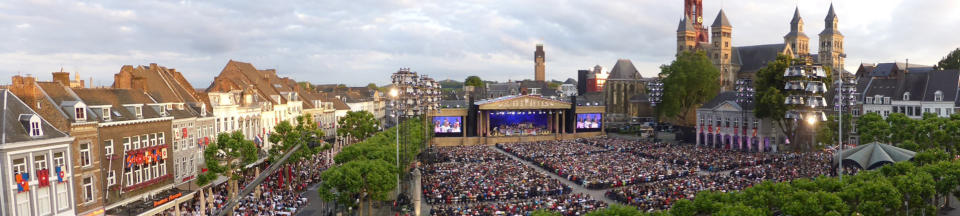

WWW.ANDRERIEUMOVIES.COM
Frank Steijns (Page 11)
violin, piano, bells



RTV Maastricht, December 31st 2024, by Erwin Lennarts
Translated by Diana D. Le
Maastricht gets new city composer
Maastricht will soon have a new city composer. On Sunday, January 19, the Maastricht
Composers Foundation will announce who will succeed Frank Steijns, who was
appointed as the first city composer in December 2022.
Steijns has created several compositions over the past two years, including a new song for the 2025
Heiligdomsvaart.
Assignment
The assignment for the new city composer is: ensure renewal of contemporary classical music; write
compositions on current themes, important events or utopian ideas; commissioned or on own initiative; for
professional musicians and amateurs; for all citizens and cultures of the city of Maastricht'. The new city
composer of Maastricht will also be appointed for two years.
Farewell
The farewell of the current city composer Frank Steijns and the announcement of the new one will be
framed by a concert in the Sint Servaas Basilica. Frank Steijns will then perform his own compositions on
the carillon (which can be heard in the Pandhof) and work by the new city composer will sound on the
organ.
June 29, 2026 interviewing article from De Limburger.
by Ronald Colée, © Annemiek Mommers
translation by Ineke, Diana D. Le
Frank Steijns has been with the Rieu Orchestra for 35 years: "Without André, I
would place my violin on the windowsill like a vase with a flower in it"
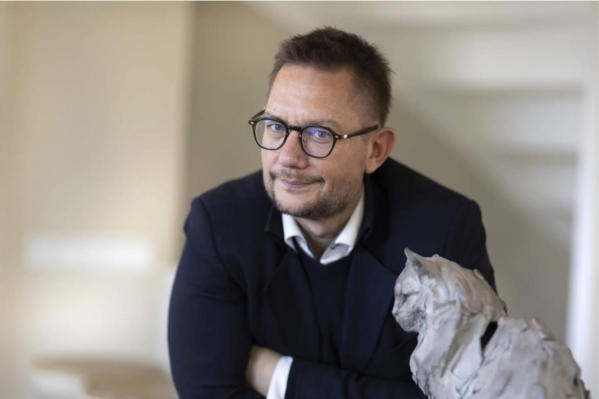
With five jobs, Frank Steijns is a busy man. The 55-year-old from Maastricht is a violinist with
André Rieu’s Johann Strauss Orchestra, city carillonneur of Maastricht, Weert, and Heerlen, and he
runs his own music production company. "I work hard, but I have never had to apply for a job a
single day."
Song lyrics as a guide
Every two weeks, we interview a well-known Limburg resident from the world of Media & Culture
using song lyrics as a starting point. This time, it is violinist and carillonneur Frank Steijns.
The Bilzen native studied violin at the conservatory in Maastricht and violin music theory, and orchestral
conducting at the Lemmens Institute in Leuven. At the same time, he trained as a carillonneur in Mechelen.
Since 1991, he has been a member of André Rieu's Johann Strauss Orchestra. He combines this position
with the role of city carillonneur in Maastricht (since 1994), Heerlen (1995), and Weert (1997). Steijns was
also a pianist with the Maastricht Salon Orchestra from 2015 to 2026.
The 55-year-old musician is married to opera singer Madieke Schoots. The couple lives in Maastricht.
1.Geneet van ’t laeve langs este kins (Sjef Diederen – Geneet van ’t laeve) (Enjoy life).
“I want to, as comedian Youp van ’t Hek once said, 'cheer towards death'. By the age of twelve, I had
already been resuscitated twice. Once after I had drowned in a swimming pool, and once during
emergency surgery after doctors had ignored appendicitis for two weeks.
"Additionally, I was bullied a lot in my younger years, because I was overweight, wore glasses, lisped, and
played the violin. After that second resuscitation, I consciously decided to turn life into one big party.
"Because of what I have been through, I now possess tremendous resilience, a great ability to put things
into perspective, and I see the humor in everything. I enjoy my jobs as a carillonneur and a member of the
Johann Strauss Orchestra. Although, regarding the Burgundian aspect (Steijns laughs), my wife Madieke
and my weight coach would allow me to ‘enjoy’ things in a slightly more structured way.”
2. As long as he doesn't become a footballer, they might kick him half to death (Boudewijn de Groot
– Jimmy)
"As for this title: I never did any sports until I was fifty. I weighed the same in my first year of secondary
school as I do now. I still remember coming home from school proudly because I had been allowed to call
'start' during the Cooper test.
"From the very moment I was five years old and saw my father inaugurate the new carillon of the Sint-
Servaas for a Vrijthof packed with people, I wanted to become a carillonneur too. However, when I saw him
playing the City Hall carillon a week later for an empty Market, I also knew that I wanted to change that.
"I wanted to make the whole world just as enthusiastic about this instrument as I was. That almost became
an obsession. But thanks to the André Rieu act where I run into the tower of the Sint-Servaas – and got
more than fifteen million views for my rendition of the Motörhead song 'Ace of Spades' – I think I
succeeded quite well.
"In addition, I am of course really hit with the jackpot; I haven't been unemployed for a single day, because
André called the very day after my final exams to recruit me for his Johann Strauss Orchestra. He is more
than just my boss; he is also my coach and mentor. Just as he affectionately speaks of a small and large
family in relation to his orchestra, I have a small and a big father.”
3. Papa, I'm becoming more and more like you (Stef Bos – Papa)
“I sometimes say: I wasn't raised, but drilled, by two incredibly sweet, creative, and musical parents. Before
my birth, my father, Mathieu, was on the verge of an international breakthrough as a conductor and concert
pianist, but then I arrived and he became a teacher at the music school so he could be home more often.
"He was a man with enormous charisma, a natural authority. The ideal father, even though the failure of his
dreamed-of career always weighed on him. My mother, Magda, had everything it takes to become an
academic, but because she already had three brothers who were studying, that wasn't meant for her. So,
she became a schoolteacher. She was strict. A woman with ironclad discipline. A real pitbull.
"In Waterschei, she taught a class of sixty children of eighteen different nationalities, not a single one of
whom made a spelling mistake by the end of the year. My mother was also one of the founders of remedial
education, teaching in Belgium, an educational method for children with learning difficulties.
"She was my teacher in the second and third grades of primary school. Do you know what the only
conclusion she wrote in my report card, which contained five tens, four nine-and-a-halves, three nines, and
an eight? ‘Frank works too sloppily’.
"Later in life, she studied at the art academy, which she completed with a ten. But then she went blind,
meaning she was barely able to practice her artistic profession. My mother insisted that I also take violin
lessons when I was six, because she had wanted to learn to play the instrument herself but had never
gotten around to it.
"Eventually, I went to the conservatory. Not because I enjoyed playing the violin, but because I was good at
it. For that reason, the violin as an instrument probably never became my great love. I like the carillon
much more. That is why, after the conservatory, I also went to the Royal Carillon School in Mechelen. And
now, so many years later, I am leading the touring life my father missed, and I am the violinist my mother
had wanted to become. There, every night on stage, I fulfill not only my dreams but also a little bit of
theirs."
04 She masters the art of belonging to me (Frans Halsema – For Her)
“At fifteen, I thought I would never get a girlfriend. Until, around my twentieth birthday, the ladies in the
orchestra said: you are such a sweetheart, you can have anyone. That’s when I started losing weight, got
braces, and glasses with more expensive, thinner lenses. I was a late bloomer, but I have had several
relationships since then. The nice thing is that I have managed to maintain a bond of friendship with all my
exes. The most important thing I learned from those relationships is that you cannot possess someone, but
are actually only allowed to walk alongside him or her.
"Eleven years ago, I met Madieke. She went to Prague as a substitute with the Johann Strauss Orchestra.
We had good conversations, but after that trip, we lost sight of each other. Until I ran into her a year later at
Opera Zuid. During the rehearsal period, we kept bumping into each other for weeks on end at the craziest
places and moments. Almost too much to be a coincidence. As if someone pulled on the strings. It felt
different, too. Whereas before, I could fall in love with a canary at first sight, here it was immediately a
deep-seated feeling.
"Madieke was a train I couldn't afford to miss. But then again, I was constantly on tour and she had all sorts
of projects in the Netherlands. So, this relationship didn't stand a chance of succeeding anyway. When
André heard that, he said: 'Then why don't I offer her a one-year contract?' The rest is history.
"We have now been married for six years and we make sure that our relationship never becomes taken for
granted. What do I like about her? Everything. She is stunning, she is honest, she can sing beautifully,
laugh uncontrollably, and is enterprising in spirit. In addition, she is truly hilariously funny when she—usually
in the bath—practices Maastricht dialect words out loud, so she now speaks them almost without an accent.
"When I once introduced her to double bassist Dominic Seldis, he said to me: 'Is this your wife? Then you
must be rich as shit!' That is exactly how it feels. We are both Capricorns and keep each other well
balanced. We understand each other with just a few words, even though we are incredibly different in some
respects. I often taste the sweet first and then the sour, whereas with Madieke, it is usually the other way
around.
"Because we are both musicians, we also understand each other's passion and realize that when you
are—as is the case with us—on each other's heels twenty-four-seven, you occasionally feel the need to
have time for yourself. Madieke is much more structured than I am. My greatest strength, on the other
hand, lies in improvising. That has proven to be an excellent combination of qualities in good times and
bad."
5. Stars come; stars go. Only Elvis remains (Gorki – Mia)
“Abroad, André is sometimes introduced as the world’s most famous unknown guy. He himself always puts
that description into perspective with: who am I next to Frank Sinatra? In a sense, that applies to me too. As
a member of the Johann Strauss Orchestra, I get to stand in his shadow. Or as the Australian opera singer
Nellie Melba – of the peaches and toast named after her – was once told by conductor Arturo Toscanini:
‘Madam, you may be a star, but in the light of the sun all stars pale.’
"Occasionally my name is mentioned as André’s successor, but that is something I absolutely would not
want, nor would I be able to make happen. I am not going to succeed André, nor anyone else. For there are
a great many little stars within the orchestra, but there is only one sun.”
6. No more fearful heart than mine (Rob de Nijs – Banger hart)
“Because of what I experienced at a young age, I have a physical tendency to be fearful. I don't dare to
skate or dive into the canal, and I will never go skydiving either. In fact, not even over a fifty-centimeter
vaulting horse at the gym. But I am not afraid of death. Because I have experienced it twice. Everything
goes black before your eyes and that’s it. Nothing to it. I found waking up again more exciting. I did find the
powerlessness scary, though. That you go headfirst into the deep end as a toddler, literally screaming your
lungs out, but only see air bubbles escaping and realize that no one can hear you. Fortunately, they picked
me up from the bottom in time. But I never want to go through that again.
"What many people don't expect from me is that I have stage fright. But only when I am standing on stage
by myself. For instance, André once handed me his violin and jacket with the microphone during a
rehearsal and I say: ‘Why don’t you play in my place for a moment?’ That makes me break out in a sweat
and start trembling. I used to have that for a long time on the carillon too. Fortunately, that has changed
from ‘help, the whole city can hear me’ to ‘wow, the whole city can hear me’.
"I also still have nightmares about my violin exam in 1994. I dream that I have to do it over and it goes
completely wrong. Fortunately, in the orchestra, André takes that fear off our hands. Because without him, I
would just put my violin on the windowsill like a vase with a flower in it. I have fewer problems with playing
the piano, because when you press a key, at least sound comes out. That is why I will never play the violin
at a wedding, because if you tremble, you don’t make the bride or the groom happy.”
Congratulations!!!
Frank on Facebook: On June 15, 1994, exactly thirty years ago today, everyone thought I
was crazy: I gave up my secure job at the music school to sign an uncertain contract with
a Maastricht artist, with the only guarantee that he had resolved to conquer the world with
him.
The rest, as they say, is history. Literal. Let's try to list everything: about 3,600 concerts (and the same
number of times the Radetzky March and Blue Danube) played for a live audience of more than 25,000,000
people. Celebrated world tours with the Mobile Carillon that was specially designed for this purpose. I wrote
out 400 arrangements and compositions, and drove about 450,000 km up and down myself to combine
everything with my beloved carillons.
But above all, I enjoyed it a lot! Seeing happy people enjoying music, evening after evening, seeing miracles
happen (people jumping out of their wheelchairs to their own surprise) and occasionally seeing world peace
develop between thousands of completely different people, but connected by music.
Made lifelong friendships and met Madieke, the love of my life. And this is just the beginning because as
André just said: On to the next thirty years! We're going to experience it. Thank you André, we keep going!!

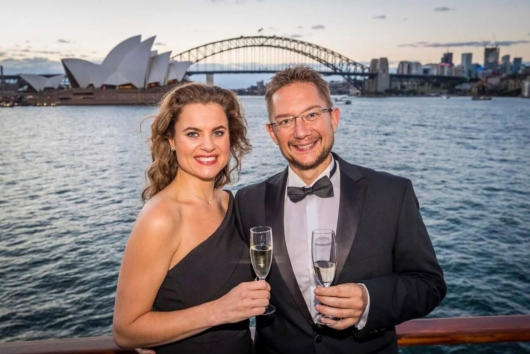
Frank and Madieke in Oslo, June 2024.


Go back to Frank Steijns,
page 10, click HERE.
7. Just give me sweet white wine and a pizza with pineapple (Snelle – Pizza with pineapple)
“My weight is stable now, but remains a struggle for life. Since I’ve had a nutrition coach, I’ve gone back to
cottage cheese and bell peppers. Every day starts with Skyr with blueberries and ends with chocolate with
an 80 percent cocoa content. Strikingly enough, I eat much more than before, but mostly protein with
vegetables, vegetables, and more vegetables.
"Because Madieke is also an entrepreneur at the cooperative supermarket Gedeelde Weelde (Shared
Wealth) alongside her job at the Johann Strauss Orchestra, we always eat organic and sustainable. The
biggest difference from before is that I now eat what my body needs and not what my sugar crash craves.”
8. Inherit your child's eyes, look through them (Spinvis – Kom terug)
“I still possess a childlike wonder. I can look at an ant just like a little child and study all its parts. I also
never want to stop being a child and fantasizing. For instance, I am the project leader of the Stichting
Toekomstmuziek (Future Music Foundation), a completely new music system where 250 primary school
children receive violin lessons during school hours. And when I show such a child a violin and ask ‘what
can you do with this?’ and they answer: ‘smash it to pieces’, then I say ‘yessss, how would that sound?’
and the ice is broken. After which that child guards the violin with their life.
"What I struggle with a bit more is dealing with electronic devices. Like when the functions of my
smartphone have changed yet again after another update. Even though I’ve always said: that never
happens to me. But what I do enjoy is playing a trick on an AI program like ChatGPT. By conducting the
conversation in such a way that it gets caught in a thought loop from which it cannot escape or completely
talks itself into a rut. Let's see if my intelligence beats the artificial one."
9. It is difficult to remain modest when you are as good as I am (Peter Blanker – It is difficult to
remain modest)
“How satisfied am I with myself? Well, I regularly suffer from imposter syndrome: the feeling that everything
I have achieved was due to pure luck. I can do a lot of things, but I also know who I owe them to.
"Of course, I got a kickstart from my upbringing and I also realize that I have had a lot of privileges. In
addition, I often find pride an inappropriate emotion. I have little ego; I consider myself rather selfless. I
meet a lot of people and have respect for those who are just as sweet to the chambermaid as to the hotel
manager; who are nice to people from whom they need nothing. Unfortunately, I see the opposite
happening too often. I really got that genuine interest in others from my dad. I hope that remains.”
10. Dich kriegs hulp van den tied jong. Den tied sleip dich doardoor (Neet oet Lottum – Hald mich ’s
vas) You get help from time; time drags you through it. Song: Hold me tight.
“Loss and how I deal with it? That’s a good one. Dad and Mom were once washing an expensive English
dinner service together, collected through savings, when my mother dropped the lid of the showpiece—the
coffee pot—and started crying. To which my father responded very dryly: ‘Then this is of no use to us
either,’ and also dropped the pot on the floor, breaking it. That applies to me too: the loss of material things
doesn’t bother me.
"With people, it’s a different story, although it is also part of the circle of life: you are born and you die. Of
course, I find it a pity that Beethoven and Bach are no longer alive. Didn’t Bach compose something like a
thousand works? Well, I would have liked to hear his five thousandth as well. But yes, without transience,
life has no value. That is why I find the memento-mori-philosophy—that death is a reason to live more
consciously and gratefully—a beautiful thought. For that reason, I try never to say something to someone
as a final word that I might unexpectedly no longer be able to rectify.”
11. Enne gojje mins blieft altied leave (Rowwen Hèze – Twieje wurd) (A good person lives forever)
“How do I want to live on? Well. Madieke and I have no children, but I do leave behind a few beautiful
compositions in which a piece of me can live on. That is why I would find it beautiful if someday – when all
the sounds of the Johann Strauss Orchestra’s Vrijthof concerts have faded – someone finds a piece of
paper with my notes on it somewhere and brings me to life once more in that way.”
12. Frank Steijns’ own choice: Speaking words of wisdom, let it be (The Beatles – Let it be)
“'Let it be' is my favorite song on the carillon. Written in the time of the hippies: why fight for something and
put in the effort, because life isn't always something you can shape. There is a famous Jewish joke that
goes: 'Do you want to make God laugh? Then tell him about your plans.' But you can't leave everything to
chance either. If you want to win the lottery, you still have to buy a ticket.
"I pursued three studies simultaneously and have been combining four jobs and a business for over thirty
years. For that reason, I haven't had a TV in the house for twenty years either, because I never watched it
anyway. Now, for the first time in my life, I have made a choice to take things a bit easier.
"I recently stopped being a pianist with the Maastricht Salon Orchestra. I am not worried about what
might happen when André stops with the Johann Strauss Orchestra. The most beautiful things in my life
have always come my way spontaneously, at exactly the right moment. I have never had to apply for a job
for a single day, traveled the whole world, been rejected, but also been allowed to love people intensely. I
have never known a boring day in my life. So, let it be."
© Marcel van Hoorn
© Marcel van Hoorn
July 5, 2026 article from L1 Nieuws, by Maan Geraats.
© Johan Strijckers
Translation by Diana D. Le
How Frank Steijns, together with Rieu,
renewed the carillon world with a mobile carillon
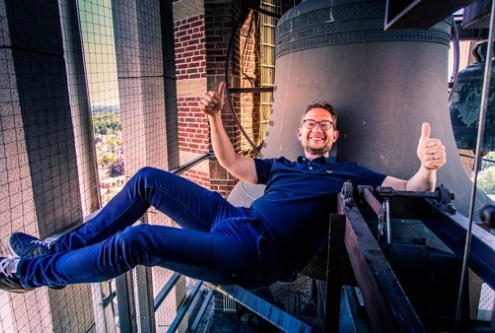
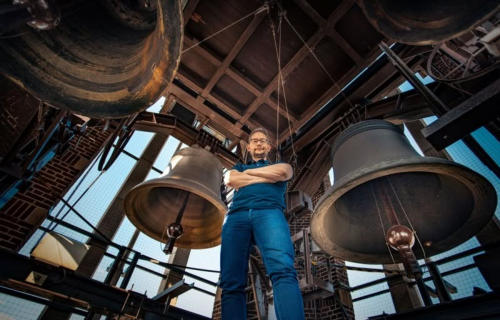
For the general public, he is mainly known as André Rieu's right-hand man. But in addition to violin, he has
another instrument that he plays at a lonely height: the carillon.
With his instrument—the violin—he has now reached the “highest possible level,” as he himself puts it. “Or
you join the Concertgebouw Orchestra, and then you’re at the highest possible level of what we call serious
classical music.”
Weert, Heerlen, and Maastricht
There are not yet a hundred of them in the Netherlands: carillonneurs. A musician playing the carillon,
consisting of dozens of tuned clocks. Steijns is one of them. In Weert, Heerlen, and Maastricht, he is the
regular man behind the wooden sticks and pedals.
Every now and then, he also leaves his violin with André Rieu, and goes for his other beloved instrument.
Something Rieu did not suggest himself. "I've said for a long time, 'André, please let me play the carillon.'
Then he used to say, "Yes, you're back with your bells." But the keeper wins: in the end, Rieu agreed
exactly 20 years ago, during the first edition of the Vrijthof concerts.
Mobile carillons
And the debut of this extraordinary instrument turned out to be a huge success, says Steijns: “People then
asked, ‘Will you come and play that when you’re in Düsseldorf?’ But there’s no carillon in Düsseldorf. So,
we designed our own carillon that we can take with us on tour—so we can play anywhere in the world.”
This redesigned, reduced-year-old variant of the age-old instrument turned out to be a game changer,
Steijns notes: "Carillonneurs are not normally the most progressive people. They sit in a tower from the
17th century and play an instrument from the 17th century. I think we've loosened up quite a bit, by getting
that instrument into the 21st century."
And that is also the case. According to Steijns, there are now about six mobile carillons.
André loses to the clocks
Frank can't earn the bread playing the clocks. That still happens with the stringed instrument. But if that
were not a factor, he knew which instrument he would choose: "I play the violin because of André in the
orchestra. I just want to keep doing Carillon as long as I can walk up the stairs.”
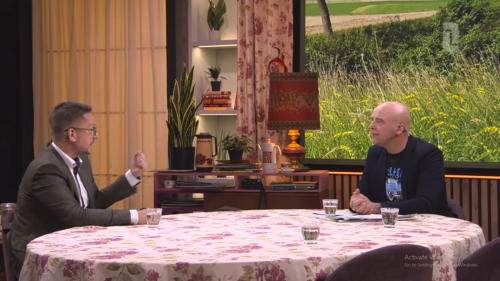
Sharing a July 3, 2026 video of an interview with Frank Steijns by Leon Verdonschot from L1.
Transcription of the video interview by Diana D. Le:
On the evening of July 2, 2026, the traditional Vrijthof Concerts by André Rieu and the
Johann Strauss Orchestra kicked off, marking the 20th edition this year. Violinist Frank
Steijns has been part of the orchestra for decades and will be speaking about the
concerts and his collaboration with Rieu.
Leon Verdonschot: "Last night, André Rieu's 20th Vrijthof concert series began. Joining us at the table is the
man who has been playing the violin for 35 years—in the Johann Strauss Orchestra—Frank Steijns.
"Frank Steijns, violinist in André Rieu’s Johann Strauss Orchestra. A warm welcome. Last night was the
very first show, the premiere of the new show. It’s 9 o'clock. You come out on stage, you start playing. When
do you know that things are going well?"
Frank Steijns: "Yes, I think at the Vrijthof, it’s never been any different. There’s such an atmosphere; we
actually know beforehand that it’s going to be good. The buzzing of the audience that tells us what kind of
evening it’s going to be. Sometimes it’s a bit quieter, but sometimes there’s a real buzz going through the
crowd, and we say, 'Well, this evening can't go wrong.'"
LV: "And what kind of buzz was there last night?"
FS: "Good. A very good buzz. Yes. The weather was good, and it’s the first time back, and it’s the 20th
edition of the Vrijthof concerts, by the way. And then we’re standing there; André moves through the crowd,
and everyone is already waving from the terraces—it’s just a fantastic atmosphere. The party has
essentially already started before we even reach the stage."
LV: "Do you feel any pre-show nerves on a night like that?"
FS: "I don't, but André does. He has to carry the whole thing, of course, while we get to sit behind him; and
naturally, we’ve rehearsed everything down to the last detail. We’ve been working on that over the past few
weeks.
"In the past, the start of a new program was pretty exciting—there was a lot of new material. Now, it’s more
of a continuation of the previous one. That gives André a bit more peace of mind, too."
LV: "It’s all about the fingers—it’s right there in his fingers."
FS: "Yes, with the exception of the surprises, of course."
LV: "Right, of course. You’ve been working with and for André for 35 years now. What kind of partnership is
it? In music, there are all sorts of collaborations. You had Lennon and McCartney—they had a sort of rivalry.
Is that your dynamic, or are you more like Simon & Garfunkel? Or is he Suzan and you’re Freek?"
FS: "That’s a good one. Well, I think it’s a combination of everything. Well, Frank and André. And I think he
has a different kind of relationship with everyone in the orchestra. And we have always a source of
inspiration. I set things up, and he decides which balls to hit and which ones not to. I think that’s the
dynamic we have."
LV: "And he’s the boss. You play second fiddle. Does that joke get made often?"
FS: "Absolutely. I do play first fiddle, but he’s the one who really drives it. He’s always the one at the top,
after all."
LV: "But that’s a dynamic you’re comfortable with, too—that you just make suggestions and he’s the one
who ultimately decides."
FS: "Yeah, during rehearsals I’m always calling out all sorts of things, and sometimes he picks up on them,
sometimes not. But he’s the one who—out of all the suggestions—chooses what happens, and usually it
comes from him."
LV: "Now, you come from a very musical background, don't you? Your father was a teacher at the music
school. Your mother went to art school and got a 10 (top grade) when she graduated. Your wife is an opera
singer. Music is your life.
"Is it even conceivable to you that there are people—and there are quite a few of them—for whom music is
just something you hear in the supermarket, or in an elevator, or coming from a radio?"
FS: "Oh, I’m very aware of that. And that’s precisely why the Stichting Toekomstmuziek Maastricht (Future
Music Foundation of Maastricht) project—which I was involved with as project leader—is a project where
we went into the school with 250 violins to give 250 primary school pupils in Maastricht, violin lessons. Well,
that’s an incredible success. And precisely, because I’m aware that there are people for whom music isn't a
given. I find it important to be able to pass that on.
"Yes, I’m really aware that the level of music in my life isn't something everyone shares."
LV: "And what happens when you walk into a classroom like that with a violin—or rather, with 250 violins?
What is the children's initial reaction to a violin when they’ve never held one before?"
FS: "Well, we handle it in a really fun way. We go into the school as an orchestra. The children come to see
us, and we play for five minutes. It’s amazing to see and just before the mood shifts—you know, that
moment where they might think, "Okay, we've seen this"—we hand them all a violin and place them within
the orchestra. So, ten minutes after they walk in, they’re already holding a violin, and we teach them two
simple things that let them play along with the entire orchestra. That’s how the seed is planted. Right,
because—let me tell you—playing the violin on its own isn't fun, but playing in an orchestra is. [laughter]"
LV: "And do you think anyone can learn it, or do you need something resembling talent?"
FS: "I believe André’s teacher—André Gertler—once said: 'Give me a violin and a chimpanzee, and I’ll
teach it to play the violin.'
"But that isn't really playing the violin. To actually play the violin takes dedication. But we did end up
choosing violins for that project because, well, if you walk into a school with four—or rather, 250—trumpets,
you might as well close down the rest of the school. So, yeah, it is something you can learn. But then again,
talent... Yeah, what is talent? Perseverance is talent."
LV: "Was that the key factor for you, too? Always doing it yourself?"
FS: "Absolutely. Well, my mother's perseverance was my talent."
LV: Your mother?"
FS: "Yeah, she was quite strict; she had always wanted to play the violin herself but never managed to. So,
I got a violin when I was six, and she made sure I practiced, but in the end, it all paid off."
LV: "But that makes it sound like... Did you enjoy it at the start, or was it something you had to do?"
FS: "No, I had to do it, and there were plenty of tears shed over that violin. I think that’s a phase every
violinist goes through anyway—unless you’re immediately captivated by the instrument. But look, with a
piano, if you press a key, you get a sound right away. But with a violin... well, you have to really slog away
before you get a decent sound out of it. Yeah. And I’m not really the type to slog away like that. I
prefer—well, to live a bit more freely. But the violin has also taught me a lot about discipline and
perseverance. So I’m very grateful for that.
"And that’s also the reason why we take those violins into schools; because you can learn so much more
than just music."
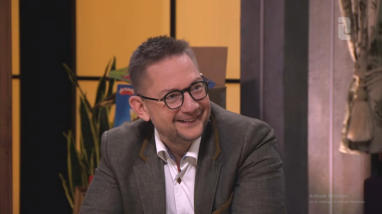
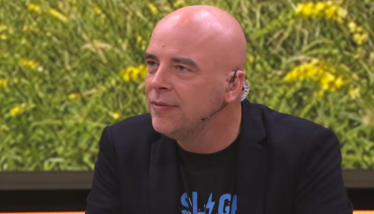
LV: "Yes. Back when you started in the orchestra 35 years ago, could you have ever imagined that you’d be
on stage with Frans Theunisz and John Tana?"
FS: "No, absolutely not. I used to have a job at a music school. I was doing that alongside my studies. And
then André called me one day and asked, "Do you feel like coming along with me tonight?" It was the
closing event of the Vierdaagse in Nijmegen (Nijmegen Four Days Marches). The whole square was
packed with people. And I sat there and—well, I felt right at home. It made such a huge impression on me. I
thought, 'I don't want to do anything else.' So, when André eventually asked 'Do you want to travel the
world? I'm offering you a contract,' I cancelled everything else. Everyone said, 'You're crazy! What about
your job at the music school?' But the music school is gone now, and André is still here. I’ve never
regretted it. It’s truly one big adventure."
LV: "You were just talking about traveling the globe—your tour takes you all over the world, of course.
You’ve also frequently brought the world to the Vrijthof, featuring so many international artists. I just
mentioned Frans Theunisz and John Tana—this year's musical guests.
"Was it a deliberate choice to shift the focus away from the international aspect and highlight the Limburg
element instead with those two?"
FS: "Yes, I think it has to do with the fact that this is the 20th edition of the Maastricht concert, the Vrijthof
concert. It is also called Viva Maastricht, and because of that, many local elements have been added. For
instance, we’re playing "Il Silenzio", and you see a Limburg brass band moving through the Limburg
landscape; and for the finale, we’ve invited back Limburg artists from the past few years, including Frans
Theunisz and John Tana. I think it’s nice to go 'back to local' now, but also 'back to basics.'
"The Maastricht concerts have long been a sort of showcase for what’s possible with lasers and all sorts of
effects. It’s wonderful to see that going back to basics—without all those international artists—works just as
well."
LV: "Yes. Can you keep it all straight? Do you remember, "Oh, this was night two of year three," or "This
was the sixth night of the fourteenth," or is it just one big, blissful blur?"
FS: "For me, it’s a blissful blur. But there are people in the orchestra who can say exactly, "Oh yes, that
was then and then—that was the night it rained." It depends a bit on the person. André does know, by the
way; he has an incredible eye for detail."
LV: "He keeps track of it all."
FS: "No, no, no. He’s got it all in his head. Yeah, he can say things like, 'Oh no, that was back then; we
were playing with the salon orchestra at the time, and we had six concerts in a single day.' We drove from
Ostend to there back then. He still remembers it all. I don't."
LV: "No, [laughter] you just follow his lead."
FS: "Yeah, easy, right?
LV: "Thanks Frank, and have a great time tonight—and on all the other nights, too."
FS: "It’ll go well. Thank you."
Leon Verdonschot



- Maastricht Dinnertime
- Maastricht Preparations
- Tickets & accomodation
- Ticket Mediation
- Trains from Amsterdam Schiphol
- Trains from Brussels, Paris, Frankfurt and London
- Maastricht Fan Dinner
- Maastricht Fan Picnic
- Maastricht City Walks
- Maastricht Mosasaurus
- Daytrips from Maastricht
- Vrijthof news
- Maastricht Bonbonniere
- Maastricht ENCI quarry

- 2026 - 2030
- 2021 - 2025
- Previous items 2025 Jul - Dec
- Maastricht 2025
- Previous items 2025 Jan - Jun
- Previous items 2024 Jul - Dec
- Index of this period
- Doctor Peter de Beer
- Phil Bee
- Carlo Bonnie
- André’s Castle De Torentjes
- André gets his own stamp
- Typewriter artist
- Duo X-Elle
- Cinema experience 2024
- Quote Business Magazine
- Concerts in Bogotá, Colombia
- Margriet Magazine (1)
- Margriet Magazine (2)
- André Rieu turns 75
- André’s 75th birthday party
- Concert in Milano
- Roadsoap 5
- Presentation of second biography
- Het Financieele Dagblad
- 2024 Christmas concerts
- Interview with Marjorie
- Interview with André Rieu
- Interview from Nous Deux
- Dorona Alberti looks back
- Maastricht 2024
- Previous items 2024 Jan - Jun
- Index of this period
- Kimberly Smith
- Amsterdam New Year's concert
- MAX Magazine
- Stradivari instruments
- Golden Carriage
- Bahrain concert
- Ineke's book
- Emma's birthday in Greece
- Organic carrots
- Mexico Illness
- New animated series
- Trio SAAMN
- Andre Rieu in cinema 2024
- Sculpture of Andre Rieu
- Making of the bull
- Book 75 year Andre Rieu
- Previous items 2023 Jul - Dec
- Maastricht 2023
- Previous items 2023 Jan - Jun
- Previous items 2022 Jul - Dec
- Index of this period
- December with André
- Ivo on Sunday
- World Record Academy
- Privé / Telegraaf
- Two Vienna concerts
- Pierre Kartner (Father Abraham)
- Shellfish from ENCI quarry
- Zagreb concert
- Great Maastricht Dictation
- South America Tour
- Tribute to Queen Elizabeth II
- Rose Festival in Lottum
- Photo exhibition William Rutten
- Fake tickets on sale
- L1 interview
- Rieu and the Royals
- Interview with Pierre Rieu
- Efteling News
- Announcement Christmas concerts
- Boundlessly popular
- Maastricht 2022
- Previous items 2022 Jan - Jun
- Previous items 2021 Jul - Dec
- Index of this period
- LINDA's Winterguests
- Max Verstappen World champion F1
- Lisbon concerts
- Christmas cinema movie
- Koffietijd program
- Christmas concerts 2021 postponed
- Mindfuck
- ARD1, Club1 program
- Promoting Portugal tour
- Limburg Central article
- Andre's birthday
- Kingsday 2022 in Maastricht
- Podcast: weird hit wonder
- NDR talkshow
- 10 Christmas concerts in the MECC
- Vera Russwurm interview
- Flooding benefit program
- Humberto interview
- Flooding in Limburg
- Two best friends, Andre and Andre
- Previous items 2021 Jan - Jun
- Index of this period
- Maastrichts dialect
- Playing again!
- OP 1 Interview
- Vrijfhof 2021 concerts postponed
- Covid Vaccinations
- EVC Congress
- Julia and Kathy
- L1 Interview
- 3 AW Nights interview
- Dutch Bake-Off
- Chinese Interview
- Rijsemus Violin builder
- Al-Jazeera Interview
- Blaaskracht
- PRESS info
- Happy New Year
- 2015 - 2020
- Previous items 2020 Jul - Dec
- Previous items 2020 Jan - Jun
- Previous items 2019 Jul - Dec
- Maastricht 2019
- Previous items 2019 Jan - Jun
- Previous items 2018 Jul - Dec
- Maastricht 2018
- Previous items 2018 Jan - Jun
- Index of first half 2018
- June 26th, VNG Congress
- May 13th, Duckrace
- May 12th, Professor Scherder
- May 11th, Time for Max
- Bulgaria concerts
- Fake Rieus
- April 2018, Tel Aviv
- East USA Tour
- MDR Um 4, March 26th,2018
- May 9th, Sandy beach radio
- Universal Music Award
- Semper Opern Ball
- New Years Concert Amsterdam
- Previous items 2017 Jul - Dec
- Lift-Off Splash Percussian School
- Index of 2nd half 2017
- Carmen Nebel show
- Christmas Events 2017
- Interview with Frank Michael
- Celebrity Radio interview
- UK Tour 2017
- USA Tour 2017
- German Tour 2017
- Q&A with fans on Facebook
- Sunday Night Interview
- Mexico Donation
- Day-Time in Maastricht
- RTL Helemaal het einde
- ARD Brisant
- NDR Tietjen and Bommes
- Making of Cinema video
- Maastricht 2017
- Previous items 2017 Jan - Jun
- Index of first half 2017
- Interview with Steven Wright BBC2
- Portrait of a Passion
- The "Real" Andre Rieu
- Welcome to my World 2
- Double interview Andre Rieu and Jo Cortenaedt
- Mirusia "From The Heart"
- Larura Engel "En Canto"
- Refugee brought Andre Rieu success
- Carla Maffioletti "A Dream"
- Venetian Carnival Revelers
- Golden Oldie from 1985
- Agnes Fizzano's shop
- Carnival speech Mayor of Maastricht
- Maastricht Pastry Route
- 2017 Valentines day
- Rieu plays in Semper Oper Dresden
- Linda Custers, Princess Carnaval
- New Years concert Ziggo Dome
- Ziggo Dome rehearsal
- Previous items 2016 Jul - Dec
- 2016 Jul - Dec, Index
- SBS6 Stars Surprise Show Dec 21st, 2016
- Liverpool december 2016
- Magic Maastricht 2016
- BBC Breakfast Today Show
- ARD Advent Show
- Two Million Likes
- CinemaLive Christmas
- SWR 4 German TV
- Strictly Come Dancing
- The meaning of life
- Leute Heute
- Dancing with the Stars
- In Conversation
- Free Mini Concert in Maastricht
- L1 Radio Interview
- Josti Band 50 years
- NDR Talk Show
- New Maastricht Salon orchestra
- Rieu in Cinema
- Maastricht 2016
- Previous items 2016 Jan - Jun
- Previous items 2015 Jul - Dec
- 2015 Jul - Dec, Index
- Rieu entertainment
- Dec. 2015, Bild Star Magazine part 4
- Dec. 2015, Bild Star Magazine part 3
- Dec. 2015, Bild Star Magazine part 2
- Dec. 2015, Bild Star Magazine part 1
- Nov. 17th, 2015, RTL Boulevard
- Nov. 12th, Shownieuws
- Nov. 16th, Loose Women
- Oct. 30th, Colectiv Club Fire, Bucharest
- Roman Holiday (3)
- Roman Holiday (2)
- Roman Holiday (1)
- Oct. 26th, Classic FM Q&A
- Oct. 23rd, MDR at 4 PM
- Oct. 10th, Jubilee Award
- Sep. 19th, 2015, Carmen Nebel
- Maastricht 2015
- Previous items 2015 Jan - Jun
- 2015 Jan - Jun, Index
- Code M, the movie
- Bucharest Concerts Part 1
- Bucharest Concerts Part 2
- A Latin Breeze
- Maestro without borders
- Copenhagen Concert
- Brazilian Fans
- George Harper In Memoriam
- Press Conference Romania Open Air Concerts
- RTL Late Night Show
- AvroTros TV Show
- Cologne Concert
- Valentine's day
- Tempeleers Carnaval Medal
- Markus Lanz Talk Show
- 2007 - 2014
- Previous items 2014 Jan - Jun
- Maastricht 2014
- Maastricht 2014, The Preparations
- Maastricht 2014, (Dress) Rehearsal
- Maastricht 2014, The Concerts
- Maastricht 2014, Fan Dinner
- Maastricht 2014, Three Fan Picnics
- Maastricht 2014, Lift-Off
- Maastricht 2014, Exhibition Marc Rieu
- Maastricht 2014, Our Story Page 1
- Maastricht 2014, Our Story Page 2
- Maastricht 2014, Venetian Carnival, the making of
- Previous items 2014 Jul - Dec
- Previous items 2013 Jul - Dec
- Advent Calendar 2013
- Spirit of Christmas
- Nelson Mandela
- Movie Marina
- BBC Breakfast Show
- German TV programs (1)
- German TV programs (2)
- L1 Late November 5th, 2013
- RTL Boulevard, October 31st, 2013
- Amira Willighagen
- Evenblij with....
- Australian tour 2013
- German TV Sept.2013
- ORF Vera Russwurm
- Jean-Philippe composes ode to Mary
- Tietjen and Hirschhausen 2013
- Rieu to play on North Pole?
- Maastricht 2013
- Previous items 2013 Jan - Jun
- RTL Boulevard June 19th, 2013
- Jean-Philippe's children's books
- What I know about women
- AR-Academy
- Copenhagen concert
- SkyArts2
- Limbourgeois April 30th
- The making of the Coronation concert
- King's inauguration Day 2
- King's inauguration Day 1
- King's Waltz
- Charity TV broadcast
- classicFM interview
- Trini Lopez
- Jean-Philippe's book
- Jermaine Jackson
- Dutch Queen Abdicates
- history fan websites
- Cologne, Jan.1st 2013
- Previous items 2012 Jul - Dec
- Limbourgeois 25 December 2012
- Chistmas in Birmingham
- Linda Magazine, December 2012
- Advent calendar
- Cinema Heerlen 2012
- Boulevard Nov 21, 2012 and Ajax
- André's Birthhouse
- UK TV Programs November 2012
- Classic Brit Award
- Andre in Brazil 2012
- Interview Dolman Rieu
- BVN Trophy 2012
- Westland Fruit and Flower parade
- L1mbourgeois August 19, 2012
- Maastricht concert 2012
- Previous items 2012 Jan - Jun
- Previous items 2011 Jul - Dec
- Maastricht 2011
- Previous items 2011 Jan - Jun
- The person behind the phenomenon
- Andre and Hopkins
- Interview in Vienna
- Frank Steijns and "Normaal" band
- PBS visiting Maastricht 2006
- Amsterdam ArenA 2011
- Pierres Hobby
- DWDD May 26th, 2011
- Madiwodovrijdag show
- André Rieu and Anthony Hopkins
- Mirusia DVD release
- Scary moments in South Africa
- BUMA Export award 2010
- Interview with Mirusia
- WDR swap reporter
- Previous items 2010 Jul - Dec
- Platin Tenors at the Cologne Christmas market
- Koffietijd December 20th, 2010
- Christmas concert by Mirusia
- Today Show December 18th, 2010
- Ice Sculpture Maastricht 2010
- The André Rieu Story
- UK November 2010 appearances
- Mexico City, November 28th, 2010
- Ivo Niehe interviews André Rieu after his illness
- André is Back!!
- LeuteHeute 151110
- André is rehearsing again
- First interview after sickness
- André cancels UK and Aussie 2010 tour
- Jubilee book 30 years André Rieu
- Interview with Pierre about André's ilness.
- Three hours marathon interview
- André escapes Toronto
- Previous items 2010 Jan - Jun
- Maastricht 2010
- Maastricht Winery, South Africa
- The best of Thirty Years André Rieu
- Mainau 2010, "Roses from the South"
- Dancing on Ice, 2010 UK finals
- Maastricht Stampsheet
- André to play for Queen Beatrix of The Netherlands
- At home with Bela Mavrak
- Export award 2009
- Farewell mayor Leers
- Flikken Maastricht
- Cologne 2010 concert
- Previous items 2009
- André and Friends ArenA 2009
- André's 2009 Christmas interview
- Christmas with Carmen Nebel
- Frank Steijns carillon
- Dutchman of the Year 2009
- Royal Variety Performance
- Brisant
- Dreams come true
- André's twins
- MDR André 60th birthday interview
- Sydney Oct.2009
- Ivo Niehe's interview with Mirusia Louwerse
- Maastricht Liberators
- Heidelberg September 2009
- Maastricht 2009, the concert
- Maastricht 2009 update
- America Tour 2009
- The week of André Rieu
- André in Villa VANTHILT
- Boulevard and Knevel and van den Brink
- André Rieu about New York
- Carmen Nebel in Maastricht
- André named best selling male artist
- André Rieu Stamp Booklet
- Maastricht 2009
- Interview with André on RTL9
- Marc Rieu, the other son
- Andre Rieu on his way to Australia
- André and Vegemite
- Ruud and Ineke meet Kathi (Caramia)
- Road Soap review
- André in de ArenA
- André get awards
- Good afternoon Limburg
- van der Vorst ziet sterren
- Previous items 2008
- Australian interviews with André
- Holiday in Australia
- Ivo Melbourne
- From Maastricht to Melbourne
- Interviews December 2008
- Melbourne Concert 2008
- Trier 2004
- Dresden
- Kerner and Nebel
- Maastricht but different
- Maastricht Vrijthof concert 2008, the highlights
- 60 Minutes, André Rieu and Andrea Bocelli
- Maastricht 2008 concert
- Aussie Interviews
- André in Ottawa
- Andre Rieu Tulips in Ineke's garden
- Ovation-Schofield
- De Rode Loper
- Boulevard
- Riverboat
- The Last Show
- Benny Neyman
- Ivo Niehe March 2008
- Kruispunt
- Tietjen and Dibaba
- Toronto by Alice Leung
- Toronto 2007
- Cologne 2008 concert
- Previous items 2007

- Agnes Fizzano-Walter
- Anna Majchrzak
- Anna Reker
- Annabelle Traves
- Béla Mavrák
- Bibi Ortjens
- Boris Goldenblank
- Brass section
- Carla Maffioletti
- Carmen Monarcha
- Christina Petrou
- Cord Meyer Leusink
- Donij van Doorn
- Els Mercken
- Emma Kok
- Frank Steijns
- Gary Bennett
- Gosia Tarnowski
- Gracenotes
- Jean Sassen
- Joline Soomers
- Justinas Kaunas
- Kimmy Skota
- Kremi Minerva
- Laura Engel
- Lift-Off (Marcel Falize)
- Maastricht Salon Orchestra
- Maja Jasinska
- Marcel Falize
- Manoe Konings
- Marc Rieu
- Michaela Oeste
- Michel Tirabosco
- Mireille Brepols
- Mirusia Louwerse
- Night of the Proms
- Pierre Rieu
- Platin Tenors
- Rene Henket family
- Roger Diederen
- Romano Diederen
- Ruud Merx / Lin Jong
- SAAMN trio
- Sanne Mestrom
- Serena Vanheuverswijn
- Stéphanie Detry
- Suzan Erens
- Tanja Derwahl
- Tiroler ohne Berge (Marcel Falize)
- VerrasSing
- Vincenzo Viola



- 2000 - 2009
- 2009: Andre meets Mr. Wijdbeens
- 2006: Josti Band
- 2006: Profiel
- 2005: Art Express Classic
- 2005: Interview with Catherine Keyl
- 2004: Portrait of a Passion
- 2004: André van Duin meets André Rieu
- 2004: Trier concert
- 2004: Rehearsal for Tros 40 year song
- 2003: Barbara Wussow
- 2002: TROS Cruise
- 2002: Barend en van Dorp
- 2001: José Carrera Gala
- 2001: The Ländler
- 2001: Open House
- 2000: BZN meets André Rieu
- 2000: A Dream Come True
- 1989 - 1999
- 1999: Andre @ Spanish RTVE
- 1999: Laat de Leeuw
- 1999: Alfredissimo
- 1998: Lesley Garrett
- 1998: Celebrities
- 1998 Early JSO
- 1997: Strauss Party - Kiel
- 1997/98 Bill's oldies 2
- 1997/98 Bill's oldies 1
- 1997: Im Krapfenwald
- 1996: Snow White, a fairytale
- 1996: André Rieu "In Concert"
- 1996: Charity Concert
- 1995 André and André
- 1995: Wiener Melange - Lübeck
- 1995: Karel van der Graaf
- 1995: Musikantenstadl
- 1995: TROS Op nieuwe toeren
- 1995: Carré Theatre (The Vienna I love)
- 1995: Veleta
- 1995: TVcommercial/A.van Duin
- 1995: First videoclip
- 1995: Angela's Challenge
- 1994: Schutterij EMM Ooy
- 1994: Strauss & Co
- 1994: Olympic Stadium
- 1992: Before he got famous
- 1989: Tineke's TV years
- Tour Programs 1987/88
- Tour Programs 1994/95
- 1985





